Computer vision lets a spacecraft estimate the pose of another object and approach it safely, from autonomous docking to on-orbit servicing.
Vision and learning for GNC · Emerging computing and sensing
02 / Earth tip-and-cue
Satellites that cue each other
Satellites that detect events onboard and coordinate with each other, turning Earth observation into a fast, autonomous response.
Distributed AI for mission operations and adaptive sensing
03 / Agentic mission design
AI agents that design the mission
AI agents that help engineers design missions and spacecraft, from requirements and trade studies to verification.
Agentic AI for mission and space system design
04 / Mars surface ops
Robots that explore together
Robots that perceive their surroundings, plan together and explore planetary surfaces with little help from Earth.
AI for space robotics and autonomous operations
AI4Space Workshop Overview
The AI4Space workshop at CVPR 2027 brings together researchers, engineers, and space domain experts to address
the unique challenges of deploying AI in space environments. As missions demand greater autonomy, resilience, and
on-board intelligence, this workshop explores how computer vision and machine learning can enable breakthrough capabilities
in spacecraft navigation, planetary exploration, satellite data analysis, and orbital operations.
AI4Space fosters collaboration between machine learning researchers and space scientists, focusing on topics such as
vision-based navigation, onboard learning, sim-to-real transfer for robotics, multi-sensor fusion for Earth observation,
and AI-driven mission planning—shaping the future of intelligent space exploration.
Areas of Focus
AI4Space 2027 invites work across the full pipeline, from onboard hardware to mission design. Two areas of particular growth get a spotlight this year:
New in 2027
Agentic AI
For autonomous mission orchestration and trajectory generation, and the automation of space system and subsystem design, reflecting emerging trends and growing interest within the space community.
New in 2027
Emerging computing and sensing
Integrating AI with new computing paradigms and sensing technologies, such as neuromorphic computing and sensing, to enable new capabilities and applications for future space missions.
Core subject areas
01
Deep learning architectures and techniques
Lightweight architectures, robust generalization, self- and semi-supervised learning, few-shot adaptation and synthetic-data training, for tasks from Earth observation segmentation and wildfire detection to spacecraft pose estimation and planetary navigation.
02
Efficient, edge, and scalable vision
Model efficiency, energy-efficient computing and sensing, and power-efficient edge hardware, so increasingly capable models, including multimodal foundation models, can run onboard under tight compute and power budgets.
03
Foundation models
Geospatial foundation models that generalize across sensors, regions and acquisition conditions, and VLMs, VLAs, LLMs and agentic AI for event-based operations, onboard mission orchestration and automated mission design.
04
Photogrammetry and remote sensing
Deep learning, geospatial foundation models and edge computing for multispectral, hyperspectral and SAR data, and onboard AI for responsive tip-and-cue observation.
05
Robot perception
3D perception, localization and mapping, pose estimation, uncertainty-aware sensor fusion and sim-to-real generalization for planetary navigation, rendezvous, docking and robotic servicing.
Technical Fellow in AI and Co-head of the Artificial Intelligence Group, NASA Jet Propulsion Laboratory
Distributed Autonomy in Space Operations and Earth Observation
Dr. Steve Chien is a Technical Fellow in Artificial Intelligence and Co-head of the Artificial Intelligence Group at the Jet Propulsion Laboratory (JPL), California Institute of Technology, with decades of experience developing and deploying AI for space missions. His work on autonomous science, automated planning and scheduling, and intelligent spacecraft operations, including Earth Observing One, ESA's Rosetta Orbiter, and NASA's Mars 2020 mission, provides a strong perspective on the transition of AI from research to operational space systems and on enabling increasingly autonomous spacecraft.
Assistant Professor, Politecnico di Milano (DART Lab)
Disruptive Computing and Sensing Paradigms for EdgeAI in Space
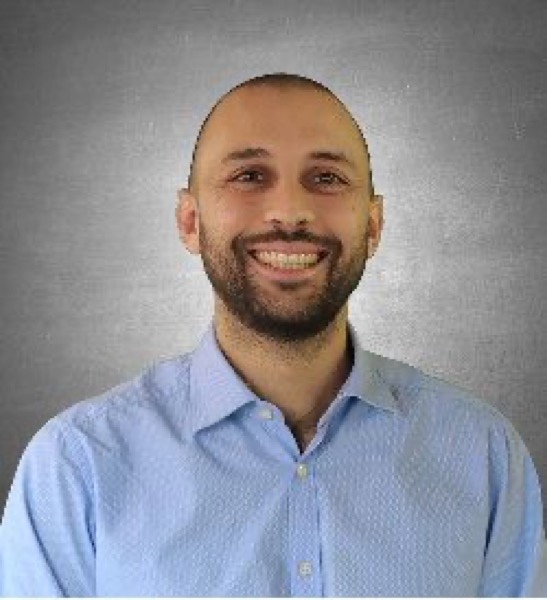
Dr. Paolo Panicucci is an Assistant Professor at Politecnico di Milano and a researcher at the Deep-space Astrodynamics Research and Technology Laboratory (DART Lab), specializing in computer vision, vision-based navigation, and spacecraft autonomy. His experience in autonomous GNC and projects such as EXTREMA and LUMIO brings expertise in AI-enabled perception and navigation, while his talk on ESA ION-V will introduce neuromorphic computing and sensing for Earth Observation.
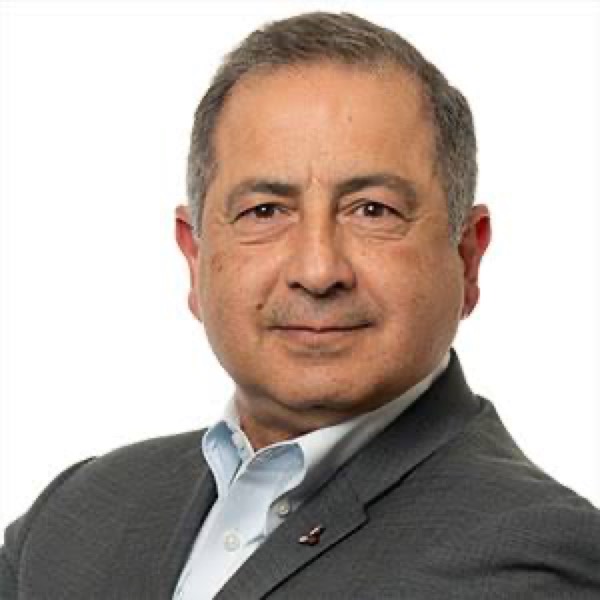
Al Tadros is the CTO of Redwire. With over 30 years of experience in aerospace engineering and leadership, he specializes in AI-enabled autonomy, machine vision, robotics, and rendezvous and proximity operations. Previously, he served as Chief Growth Officer and Executive Vice President of Space Infrastructure at Redwire and Vice President of Space Infrastructure and Civil Space at Maxar Technologies, contributing to 13 space missions and advancing in-space manufacturing, satellite servicing, and autonomous systems. He leads Redwire’s involvement in Stanford University’s Center for AEroSpace Autonomy Research, focusing on AI-driven autonomous reasoning in space. He has served on national space technology advisory boards, holds patents in attitude control systems, and contributed to early telerobotics research for the International Space Station.
Associate Professor, Georgia Tech | Director, Planetary Robotics Lab
AI for Risk-Aware Decision Making in Space Robotics
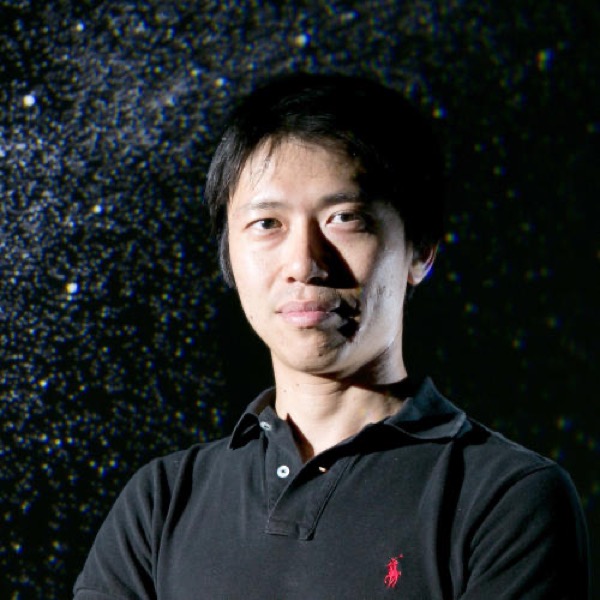
Dr. Masahiro (Hiro) Ono is an Associate Professor at the School of Aerospace Engineering at Georgia Tech and Director of the Planetary Robotics Lab (PRL). Prior to joining Georgia Tech, he spent 13 years at NASA’s JPL, where he developed autonomous navigation algorithms for the Perseverance Mars rover, led the development of Exobiology Extant Life Surveyor, a snake-like robot designed to explore the potentially habitable subsurface ocean of Enceladus, and led multiple research initiatives in AI and robotics. He also served as Supervisor of JPL’s Robotic Surface Mobility Group and as a rover operator for Perseverance.